About

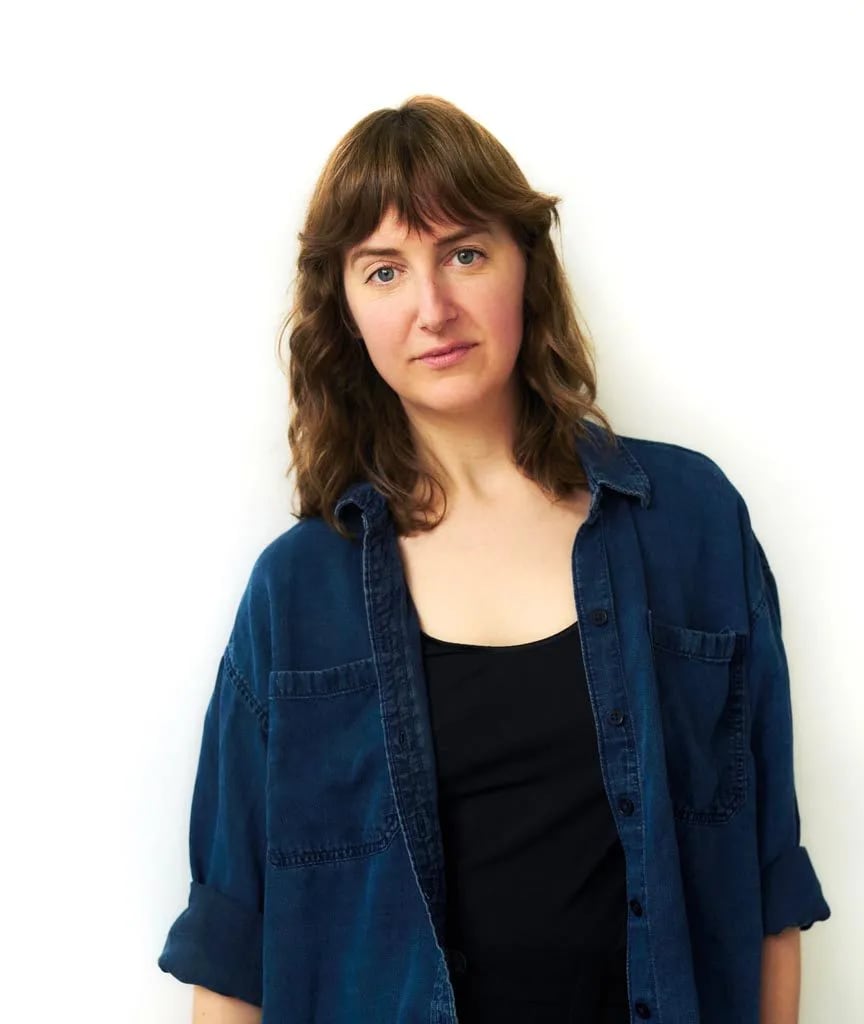
Anna Henson

I am an artist, experience designer, and educator. My work asks how technology shapes what we feel: how emotion, attention, and the sense of being present in a body get built, mediated, and sometimes manipulated by technology. I come to these questions from three directions: theater, where I worked as a projection designer; research, in psychology and human-computer interaction; and my own studio practice as an artist. I hold an M.F.A. from the Glasgow School of Art and an M.S. from Carnegie Mellon.

As an educator, my previous role was as founding faculty at the Johnny Carson Center for Emerging Media Arts at the University of Nebraska–Lincoln (UNL), where I helped shape a new B.F.A. program from the ground up. I now teach as a Visiting Assistant Professor in the School of Information at Pratt Institute, and I mentor artists and entrepreneurs at NEW INC, the New Museum of Contemporary Art’s incubator. Across undergraduate, graduate, and professional rooms, I teach the same thing: how to research a human experience and then design for it, moving fluidly between critical theory, prototyping, and design + storytelling.

As an experience designer, I have made work that exists in the immersive, experiential realm alongside other jobs that demand well-produced linear media like theater and live performance. I have designed or produced with clients like HBO, Meow Wolf, Epic Games, The Public Theater, and La MaMa Experimental Theatre Club, and built brand/experiential work with agencies including Invisible North, Fake Love, The Mill, and Volvox Labs. My own pieces — Wake, far field, Project AvatarAR, Somatic Avatars — sit closer to research, using virtual bodies, co-creative processes, and shared presence to study how people feel their way into a space, a memory, or a recovery journey. What I want from a piece is for it to take some social or technological condition and make it into something a person can feel, question, and imagine otherwise.

Short Bio

Anna Henson is an artist, experience designer, and educator working across interactive media, live performance, and human-computer interaction research. Her work examines how emotion and embodied experience shape, and are shaped by technology, drawing on psychology, feminist theory, and narrative design. She is currently Visiting Assistant Professor in the School of Information at Pratt Institute and was founding faculty of the Johnny Carson Center for Emerging Media Arts at the University of Nebraska–Lincoln, and she mentors artists and founders at NEW INC, the New Museum's incubator. As a designer, producer, and award-winning projection designer, she has created immersive and experiential work with HBO, Meow Wolf, Epic Games, The Public Theater, La MaMa, and the agencies Invisible North, Fake Love, The Mill, and Volvox Labs. Her art and research projects use virtual bodies and shared presence to study how people inhabit space, memory, and identity, and her peer-reviewed writing appears in ACM Designing Interactive Systems and the Journal of Technology in Behavioral Science. She holds an M.F.A. from the Glasgow School of Art and an M.S. from Carnegie Mellon.

Research Statement

My research is about how machines handle human feeling. The tech industry often treats emotion as a signal it can read from harvested pieces of data on their platforms. My work critically pushes back on that view. Rather, we make emotion out of context, our bodies, and our culture, and it shifts depending on who is in the room and who is watching. I study how computational systems model and shape that feeling, and how they tend to flatten it into something they can measure, predict, and sell. Sara Ahmed's idea that emotions circulate and accrue value, like a kind of currency, gives me a way to ask harder questions about affective technology: who profits when a system decides how you feel, and what gets lost in the translation. I work across human-computer interaction, behavioral science, and performance, and I borrow methods from all of them, running UX research and user studies on one side and making storytelling, visual art, and immersive media on the other.

In practice this looks like building things and watching what people do with them. My pieces Wake and far field put people into shared virtual space to see how presence, memory, and attention hold up across distance. Project AvatarAR, made with addiction recovery researchers, hands authorship to people in recovery so they can tell their own stories through avatars they help build, where a digital body becomes a way to reflect on a real one. Somatic Avatars translates gesture and bodily awareness into digital form, so that moving becomes a way of knowing yourself. I ground this work in design justice, a framework I take from Sasha Costanza-Chock, which holds that the people most affected by a system should have a hand in making it. Donna Haraway's idea of situated knowledge informs my perspective that there's no neutral, view-from-nowhere vantage, and Kat Holmes's writing on mismatch has shown me how design that ignores who it leaves out ends up getting human experience wrong.

Right now, like many of us, I'm thinking about affective AI and where it's heading. These systems keep getting better at detecting, performing, and monetizing emotion. I aim to produce new work that keeps a critical eye on the mutating landscape of AI-as-everything-and-everywhere.